


- Home
- Activity
- Conference Development
- June 16, 2013 - Safety Promotion Association Professional Courses: [Safe Operation Techniques and Hazard Prevention for Forklifts] + [Electromechanical Safety and Protection]
2023, Jun
16
Workplace Safety

June 16, 2013 - Safety Promotion Association Professional Courses: [Safe Operation Techniques and Hazard Prevention for Forklifts] + [Electromechanical Safety and Protection]
Security Promotion Association Professional Course, June 16, 112
1-【Safety Operating Procedures and Hazard Prevention for Forklifts】
Lecturer: Wang Tenghui, Senior Engineer, Industrial Safety and Health Association
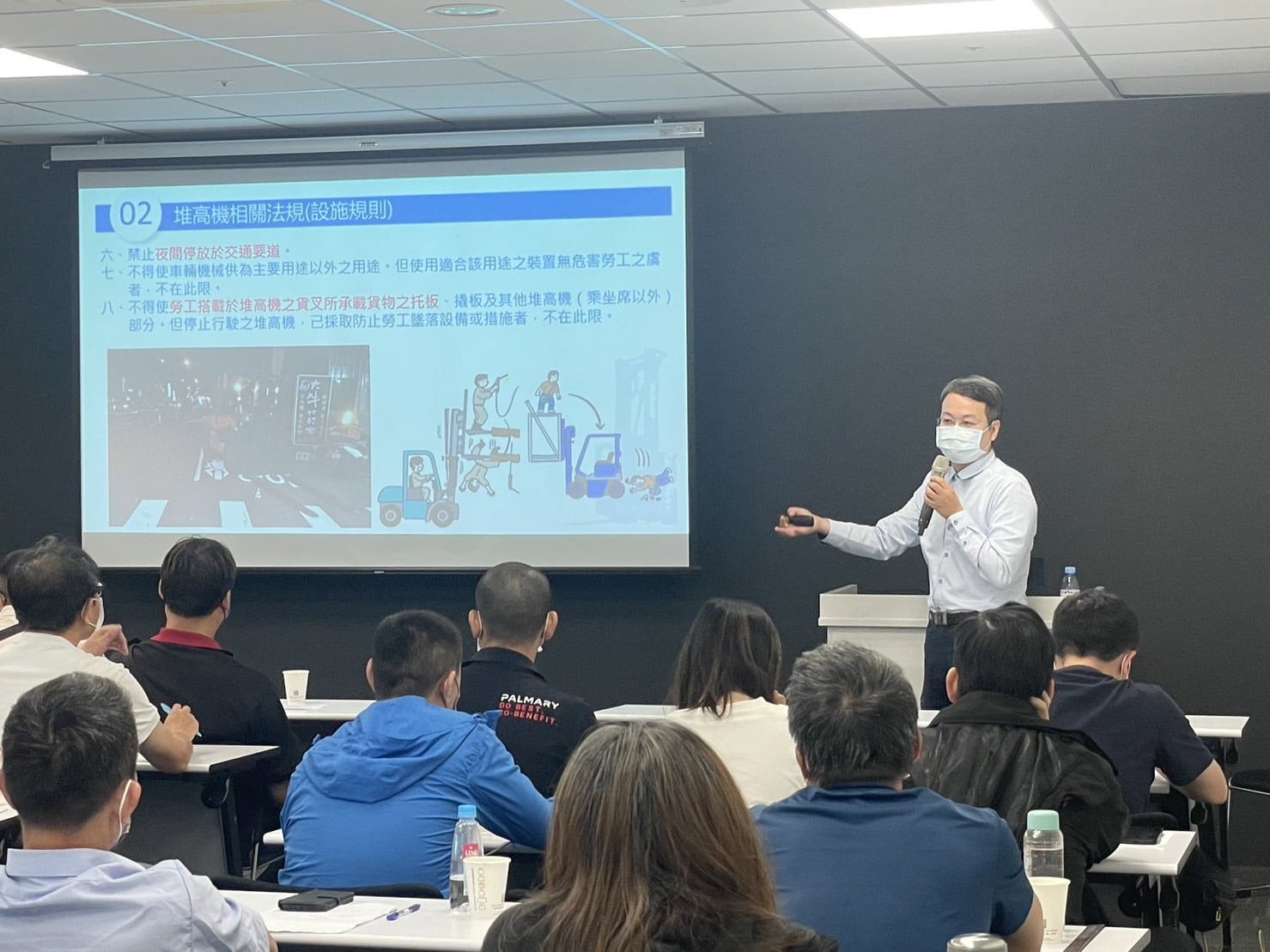
Forklifts are essential tools for handling and stacking goods. While they may seem simple, the common misconception that "anyone who can drive a car can operate a forklift" often overlooks their potential dangers. Improper operation and failure to follow safety rules can lead to serious hazards and accidents when using forklifts.
✎Five common mistakes:
1) Failed to receive forklift training or attend return training on time
2) Goods are stacked too high
3) Using forklifts as a means of transporting personnel.
4) Forklift travels too fast
5) Failure to properly turn off the power and lower the forks when finishing using the forklift.
What key points should be noted when using a forklift?
★Traffic control should be implemented when a forklift is started, and the road within the forklift's operating range should be cleared to prevent riders from colliding with it due to blind spots, which could result in injury or death to road users.
★Apart from the driver, all other personnel must stay away from the forklift. If there are other personnel nearby, the forklift should be suspended.
★The forklift is for single-person operation only; do not carry other personnel.
★Forklifts should be kept away from live conductors.
★When shutting off the forklift power, braking measures must be taken and it must not be parked on a slope to prevent it from rolling. The forks must be properly lowered, a red warning strip attached, and the engine and brakes turned off.
★When loading goods onto a forklift, it must be balanced and not overloaded. Never require personnel to squat or stand behind it for counterweight purposes.
★Forklifts are not allowed on roads; a temporary permit must be obtained from the relevant authorities if necessary.
★Effective January 1, 2015, Article 116, Paragraph 14 of the Occupational Safety and Health Facilities Regulations stipulates that when using seated or side-lift forklifts, it is imperative to wear a safety belt to prevent injury or death from being crushed in the event of a forklift tipping over.
While forklift operation may seem simple, its safety guidelines and hazard prevention are crucial for ensuring workplace safety. Forklift licenses are not permanent, and personnel should undergo regular retraining to update their knowledge of relevant regulations. Only unsafe environments and unsafe operations can prevent safety. Therefore, continuously improving awareness and assessment of forklift safety, and strictly adhering to guidelines and measures, is the only way to protect the lives of every forklift operator!
2-【Electromechanical Safety and Protection】
Lecturer: Ho Wen-shu, AIDC (Aerospace Industrial Development Corporation)
Electromechanical equipment and systems play a vital role in the working environment of frontline operators, providing us with numerous conveniences and efficiency in our work. However, if these devices and systems are not properly operated, maintained, or protected, they may cause serious harm to personnel and the environment. Therefore, electromechanical safety and protection are of paramount importance, and we must ensure that risks are minimized and the safety of personnel and assets is protected when using electromechanical equipment and systems.
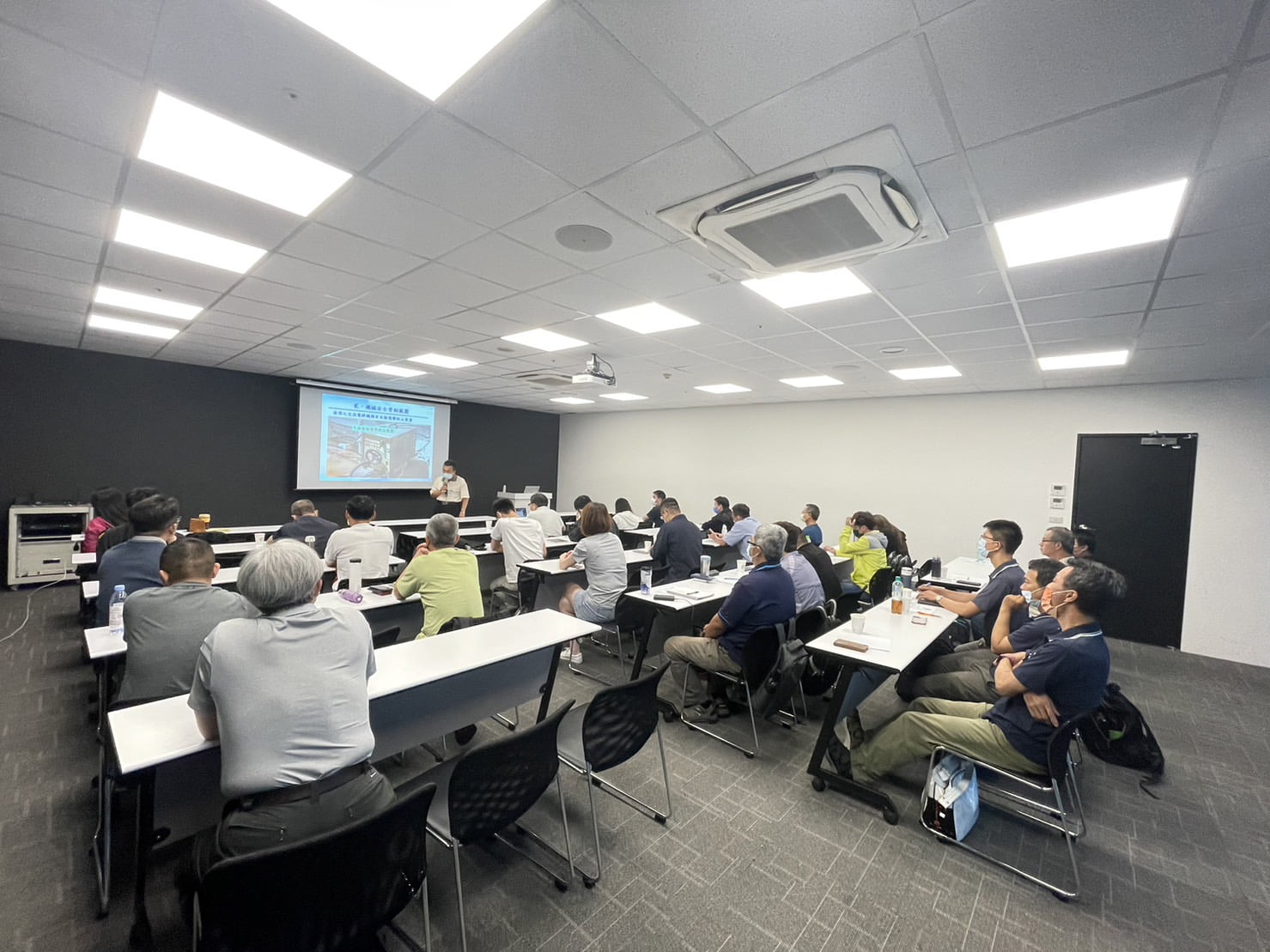
✎List some common equipment, hazards, and precautions in the factory:
★Starting from July 1, 2018, manufacturers or importers of machinery, equipment, or appliances designated by the central competent authority must submit the device to the Ministry of Labor's verification agency for formal verification. Upon successful verification, a certificate of conformity and serial number must be affixed to the device.
★ Welding machine: Should have an automatic electric shock prevention device. If an external electric shock prevention device is available, it must also be installed. Any exposed parts of the wires must be insulated to prevent electric shock.
★Electrical box: Should be equipped with insulating cover (intermediate partition) to prevent electric shock.
★Gas cylinders, whether full or empty, must be capped. They must be stored upright, secured, and separately; they must not be tilted or stacked.
★Wires should not be bent or stacked under heavy objects to avoid creating resistance, overheating, and potentially causing a fire. Wires of different diameters should also not be spliced, as this will affect grounding and load-bearing capacity.
★The grinding wheel's rotational speed must be greater than the grinding machine's circumferential speed; arbitrarily matching them is not advisable as they may break and eject, causing injury.
★ For electric motors with a voltage of 150 volts or higher to ground, a residual current circuit breaker (RCCB) for inductive current protection should be installed on the motor.
★ Containers involved in metal welding, melting, or heating must be placed in a well-ventilated area, away from temperatures exceeding 40 degrees Celsius, and kept away from heat sources.
★Acetylene generators should be equipped with safety devices to prevent backflow and flashback.
★For crane lifting operations, the crane body should be marked with its load capacity, and the hook must have an anti-slip tongue to prevent objects from falling. The steel cable should be a balanced six-strand cable, with no gaps between the cable clamps, and must be evenly tightened. Cables with a broken strand, obvious damage, or corrosion should not be used. Fiberglass strapping should not be knotted to increase its length for lifting purposes.
★When operating helical machinery such as lathes, milling machines, drilling machines, and corner-cutting machines, do not wear scarves, cotton gloves, identification badges, etc. Cuffs must be fastened tightly, and hair must be tied up to avoid being caught in the machinery and causing injury or death. Safety goggles must also be worn.
Electromechanical safety and protection are crucial for ensuring the safety of personnel and equipment during the operation of electromechanical equipment and systems. By conducting risk assessment management, providing training and education, issuing warning signs, conducting regular maintenance and inspections, and providing appropriate personal protective equipment, the likelihood of accidents can be minimized, protecting the safety of personnel and assets. In any electromechanical project, safety should always be the top priority, ensuring that appropriate protective measures are implemented to create a safe and reliable working environment.
Thank you to all the attendees. Everyone gained a lot. Members who need the course summary file can click the link below to download it.
112_06_16_Stacker_safety_operation_essentials.pdf
112_06_16_Electromechanical_safety_and_protection.pdf
112_06_16_Electromechanical_safety_and_protection.pdf
Organizers: Liao Yu-kai, Director of the Security Promotion Association / Wang Chih-ming, Secretary-General
TYSIA TYS
Return To List