

- Home
- Products
- Industrial Services
- ASR ASIA
- System verification service
ASR ASIA
System verification service
Share:



Product Description
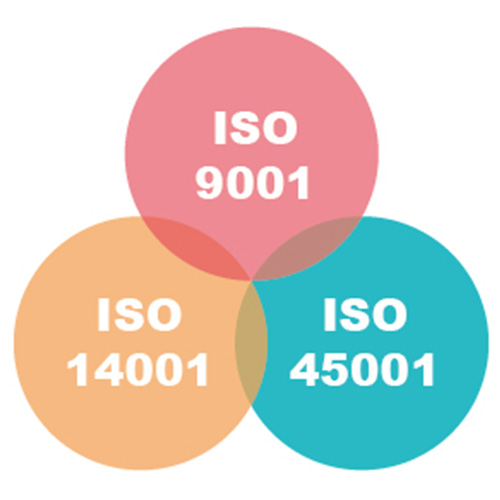
- ISO 9001 + ISO 14001 + ISO 45001
- INTEGRATION MANAGEMENT SYSTEM
- Quality + Environment + Safety and Health Multi-System Integration Verification
Many requirements are compatible across different system validation standards. To avoid wasting audit resources and costs, ASR can assign audit personnel with different professional backgrounds to form an audit team based on the client's background and different system standards, and conduct integrated validation of multiple systems simultaneously. Currently, the main areas of integration are: quality + environment + safety and health, or two of them.
Service Scope
 |
ISO 9001 Quality Management SystemISO 9001 is an international standard for quality management issued by the International Organization for Standardization (ISO). Currently, more than 100 countries have adopted ISO 9001 as their national standard. The purpose of this standard is to assess and register quality management systems, and it is applicable to companies of all sizes and across all industries. |
 |
ISO 14001 Environmental Management SystemWith increasing environmental awareness, all industries are paying more and more attention to and managing the environmental impact of their products and services. ISO 14001 is primarily a set of international standards for environmental management, which can enable you to:
|
 |
ISO 45001 Occupational Safety and Health Management SystemISO 45001 is an international standard for occupational health and safety management systems, but it is not a standard issued by ISO. ISO 45001 was created to assist and verify that companies meet general requirements. This standard primarily aims to improve companies' management of occupational health and safety risks and enhance their management performance. |
 |
ISO 13485 Medical Device Quality Management System StandardISO 13485 is a set of quality management system standards for the medical device industry, compiled by ISO/TC 210, the Technical Committee on Quality Management of Medical Devices. The standard includes basic safety requirements, risk analysis/management, clinical evaluation/investigation, labeling, other technical standards, as well as information feedback systems, post-market surveillance, customer complaint investigations, alert systems, and advisory notices. |
 |
ISO 22000 Food Safety Management SystemThe ISO 22000 food safety management system standard provides a framework for the global food supply chain that combines the principles of the ISO 9001 quality system. Employing the PDCA (Plan-Do-Check-Act) cycle, it integrates GMP (Good Manufacturing Practice) regulations with HACCP (Hazard Analysis and Critical Control Points) principles, giving the global food supply chain a clear direction. Obtaining ISO 22000 certification demonstrates a commitment to and practice of food safety management, earning the trust of global consumers. It applies to all direct and indirect suppliers in the food supply chain. |
 |
IATF 16949 Automotive Quality Management SystemIATF 16949 is an industrial technical standard, not an ISO standard. This standard was developed by a special task force of the International Automotive Industry in conjunction with ISO. It stands alongside existing global automotive industry quality management standards. Both ISO 9001 and IATF 16949 focus on the requirements of quality management systems, such as the design and development, production, installation, and service of automotive-related products. Furthermore, both standards are customer-specific requirement-oriented. |
 |
AS 9100 Aviation Quality Management SystemAS 9000 is the international standard for the aerospace industry, known as AS9100 in North America, EN9100 in Europe, and JISQ9100 in Japan. AS9100 international verification can be applied to the vertical supply chain of the aerospace industry, including the design and manufacturing processes of equipment, aircraft parts, airport and flight route scheduling, spare parts, and cargo transportation. Whether aerospace industry players have passed AS9100 standard verification has become a necessary consideration for procurement by major aerospace manufacturers such as Boeing and Airbus. |
Contact Us
If you have any suggestions or advice, please leave your valuable information and we will reply to you as soon as possible.